
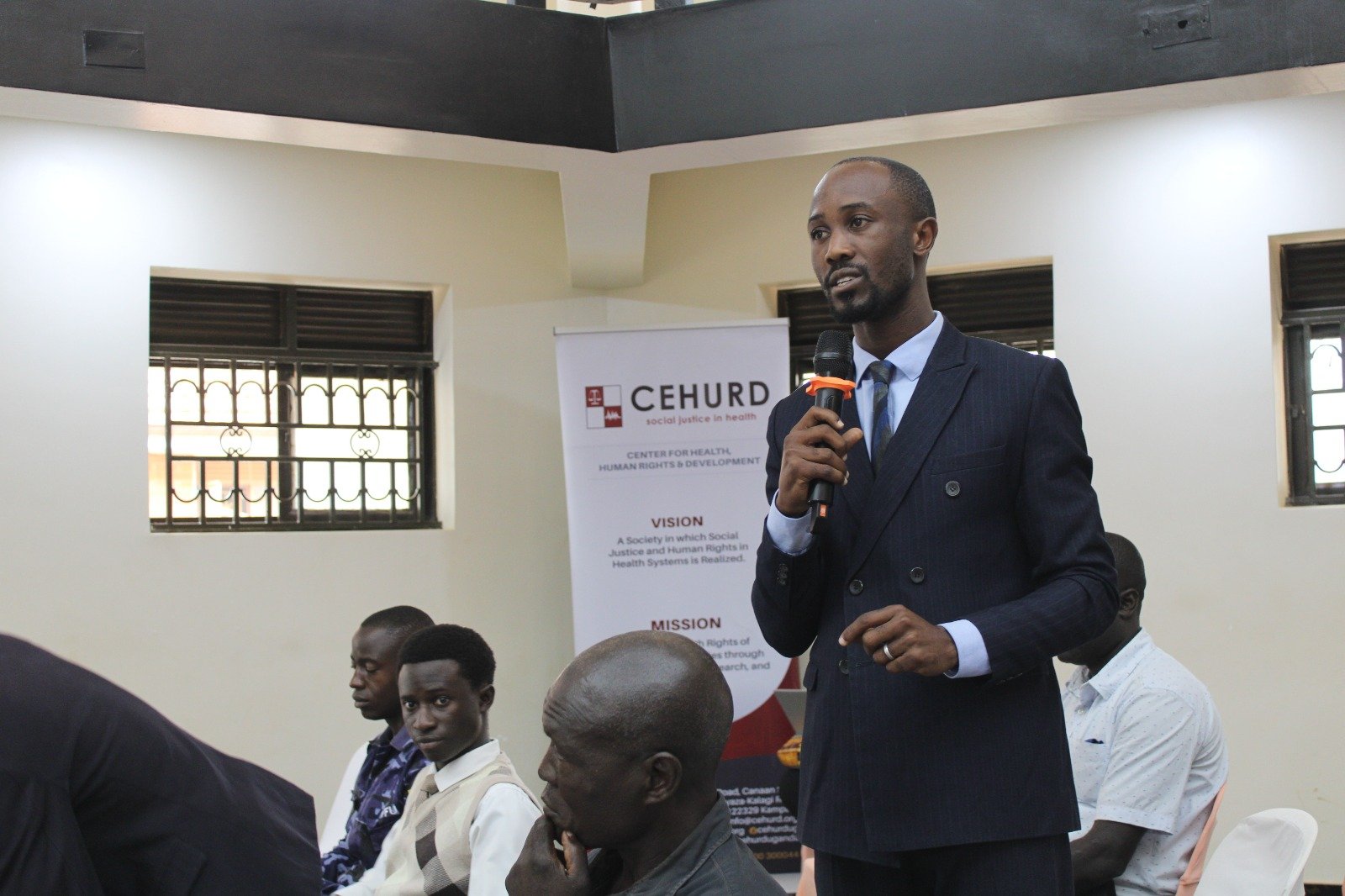
Calls for urgent reform in Uganda’s criminal justice system dominated discussions at the Wakiso District Human Rights Committee’s commemoration of International Human Rights Day, where key stakeholders urged government institutions to revisit longstanding colonial-era laws and outdated court procedures contributing to the persistent overcrowding in prisons.
Speaking at the event, Henry Byansi, Program Manager at Chapter Four Uganda, highlighted that Uganda’s prison facilities remain critically overpopulated—holding more than four times their intended capacity—due in part to arbitrary arrests, poor exercise of prosecutorial discretion to sanction files, and the criminalization of poverty and trivial conduct under obsolete laws.
“We continue to see individuals incarcerated for offences such as ‘common nuisance’ or detained for civil debts—situations that do not warrant deprivation of liberty,” Henry remarked. “We need bold legal reform to decriminalize poverty, protect freedom of assembly, and humanize our justice system.”
Uganda retains several colonial-era petty offences, including idle and disorderly, rogue and vagabond, and common nuisance. These vague and repressive offences are often used to target the poor and peaceful demonstrators. Across Africa, human rights bodies—including the African Commission on Human and Peoples’ Rights—have urged states to repeal such laws, calling them discriminatory and inconsistent with the African Charter.
Speakers also called for the revision of Uganda’s Civil Procedure Act to abolish the arrest and detention of individuals over unpaid civil debts. The practice, they argued, violates international human rights treaties such as the International Covenant on Civil and Political Rights (ICCPR), which prohibits imprisonment solely for failure to fulfil a contractual obligation.
Data from the Uganda Prisons Service shows that many detainees are held for weeks or months over small sums they cannot afford to pay. “Arresting someone because they are poor or unable to pay a debt is not justice; it’s punishment for their circumstances,” Henry noted.
“Imprisoning someone for a civil breach contravenes the right to liberty that reserves detention for criminal conduct. It criminalises economic hardships, blurs civil-criminal law distinction, erodes public trust in the justice system, and causes broader social harm,” Anthony Masake, Executive Director of Chapter Four Uganda, noted. “Alternatives such as garnishment and attachment orders, mediation and repayment plans, and credit reporting are more efficient human rights-compliant mechanisms.”
Participants resolved to push for legislative reform through continuous engagement with the Ministry of Justice and Constitutional Affairs and the Parliament of Uganda. They also committed to strengthening community awareness about rights and promoting alternatives to custodial sentences.
The Wakiso commemoration ended with a shared message: to build a justice system that upholds human dignity, Uganda must repeal outdated laws and ensure that imprisonment remains a measure of last resort.